Human, Seabird, and Restoration History: The first light station was built in 1827 and there are many tales of heroism associated with the light keeper era, none more famous than that of young lighthouse heroine Abbie Burgess. The light is now automated and the buildings and facilities are maintained by MCINWR and the Seabird Restoration Program. The island has a long-intertwined seabird and human history – the first wardens here were light keepers of Matinicus Rock, hired by the American Ornithologists Union in 1901 and soon thereafter by the National Association of Audubon Societies (National Audubon Society).
The first wardens were charged with protecting nesting birds from widespread slaughter by millinery hunters. Most seabirds were already extirpated from Maine at this time, including puffins, but one pair survived here in 1901. In the 1930's Carl and Harriet Buchheister (he was past Audubon president and first Director of the Audubon Camp on Hog Island) began a long tenure of studying storm-petrels and continuing the role of Audubon warden for the island. They resided in what is known as 'Audubon House' most summers from 1936-1981. In 1979, Project Puffin staff first visited to study puffins in what then was the only Maine nesting colony. Unlike most Maine seabird colonies, nesting puffins, terns, storm-petrels and other species continued using the site throughout the 20th century due to the consistent presence of wardens.
Access: The island is closed to public visitation during the seabird breeding season (April 1 to August 31). Staff transportation to the island is provided by charter or by MCINWR staff; MCINWR staff depart from Rockland, while the charter usually departs from Vinalhaven Island (a 1 hr 15 minute ferry ride from Rockland). The trip to Matinicus Rock takes approximately 1½ -2 hours depending on departure point, weather and sea conditions. All food, gear, water and personal equipment are rowed ashore by dory or a small inflatable rowboat (stored on the island); the landing can be very difficult and sometimes landings are prevented for days at a time due to surging waters. High tide is generally the preferred time to land on the island's boat ramp. Island staff and volunteers are responsible for securing supplies and groceries before heading to the island.
Island Living and Accommodations: During the field season, 4-6 people live and work on the island. With the exception of the Island Supervisor and resident Research Assistant, staff and volunteers stay on the island for an average of 2-3 weeks. The Matinicus Rock light station is the hub of the living quarters and serves as a kitchen, dining room, office, and sleeping quarters. Staff also sleep in nearby Audubon House which provides access to the nocturnal serenade of Leach's Storm-petrels and Manx Shearwater. The kitchen is by far the most luxurious of any on the Puffin Project. It has a propane stove and small refrigerator. There is an indoor shower stall (using solar shower bag) and an outdoor composting toilet (with views of puffins). A solar electrical system powers research needs and lighting for the station.
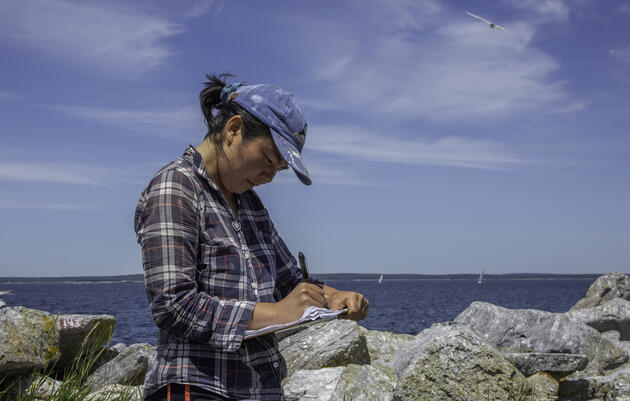
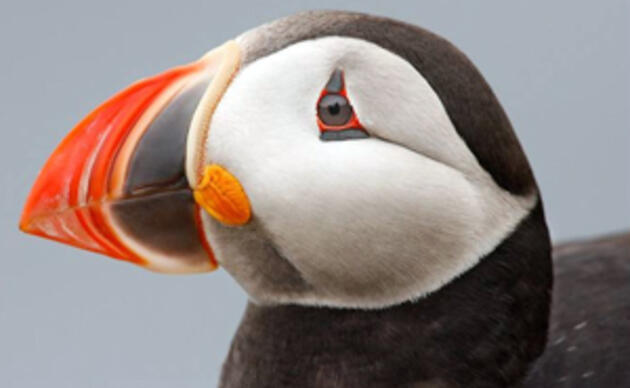
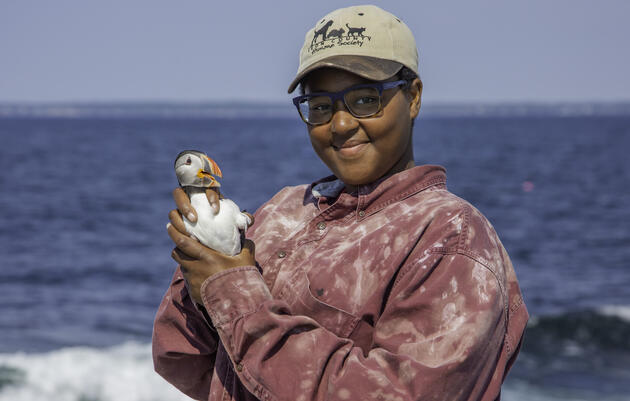
Nesting and Migratory Birds: Matinicus Rock supports one of the most diverse seabird breeding colonies on the US Atlantic Coast. Atlantic Puffins, Razorbills, Black Guillemots, Leach's Storm-petrels, Arctic, Common and occasionally Roseate Terns, Laughing Gulls, and Common Eiders nest. Matinicus Rock is also the only known nesting place for Manx Shearwater in the United States. Common Murres are regularly present, though not breeding on the island. The island supports over 350 pairs of nesting puffins, 400 pairs of razorbills, 1,000 pairs of terns and about 700 pairs of Laughing Gulls. Black Guillemots and Leach's Storm-petrels are also common. Spring migration can be outstanding; 194 species (including breeding birds) have been recorded on the island since 2000, including notable records for Yellow-nosed Albatross, Red-billed Tropicbird, and Plumbeous Vireo. Island Monitoring, Research and Management Projects: The Matinicus Rock field season begins in mid May and continues through mid August. The Island Supervisor is responsible for coordinating the timing of specific projects throughout the field season. Work includes, but is not limited to, the following projects: annual tern, eider, and Laughing Gull census; tern band resighting, chick provisioning, productivity and chick growth studies; Razorbill and puffin census, productivity, banding, band resighting and provisioning studies; Leach's Storm-petrel productivity; daily weather and bird lists; and predator management.